



Two researchers from the University of Sopron and their scientific partners have made a internationally significant discovery regarding the development of carbonate structures (stromatolites) formed by microbes. Their finding were published in the renowned scientific journal, the Scientific Reports. The new research could contribute to a better understanding of carbonate structures formed in Earth’s geological past and help uncover modern correlations of similar processes. Experts from the University of Sopron collaborated on this project with researchers from the HUN-REN Research Centre For Astronomy and Earth Sciences and the Eötvös Loránd University (ELTE).
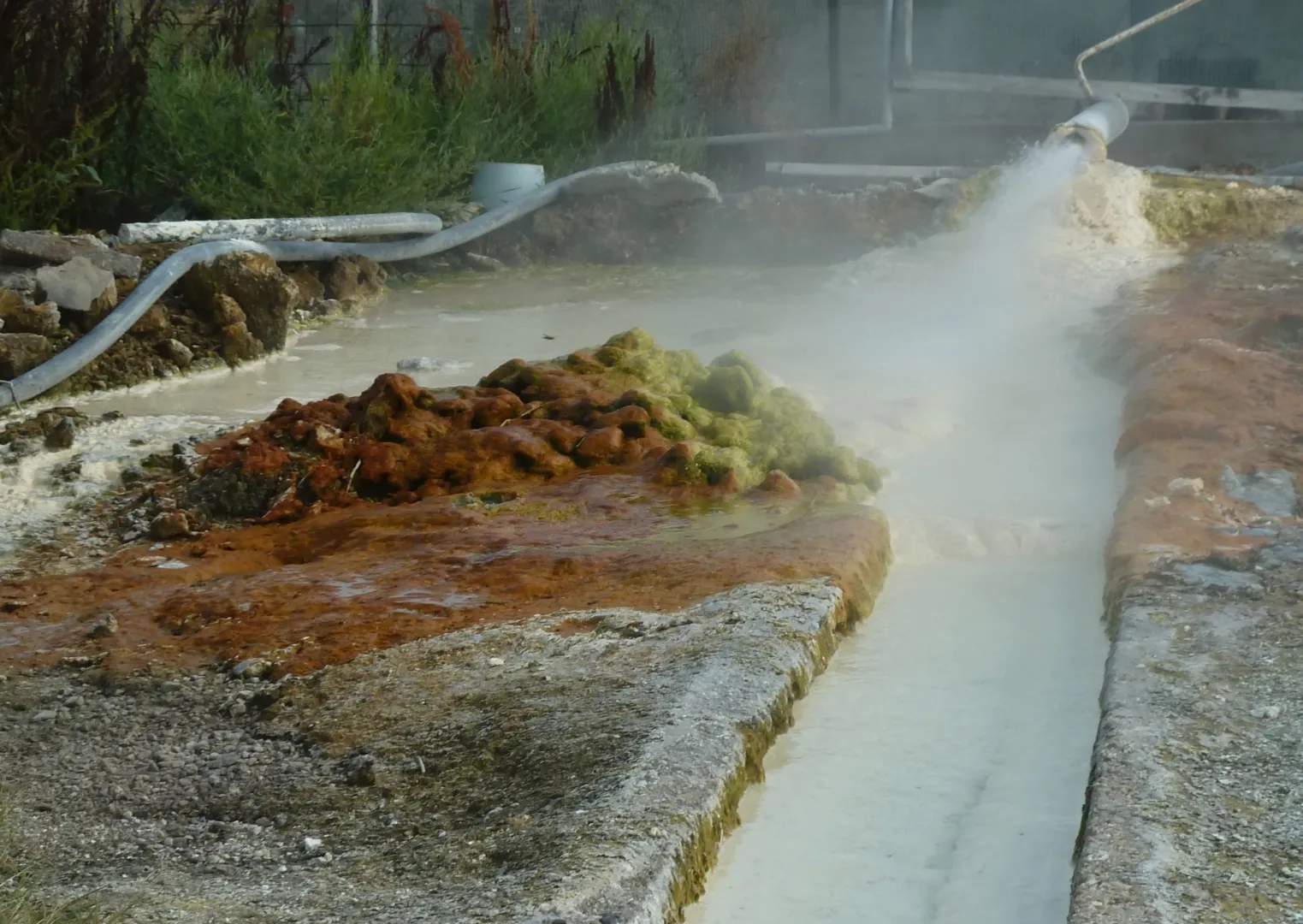 |
| Figure 1: As the 79.2°C thermal water reaches the surface, white calcium carbonate precipitates, forming a substrate on which lush, layered red and green biofilms—woven bacterial mats—develop (Illustration by Judit Makk). |
The stromatolites are layered carbonate formations created by photosynthesizing cyanobacteria. With a history dating back to more than 3.5 billion years, they are among the oldest fossils on Earth. These organisms formed vast colonies in the shallow waters of ancient oceans and seas, playing a crucial role in increasing the oxygen content of the Earth’s atmosphere round 2.2 billion years ago during the Archean Eon. It is of great scientific interest, from both ecological and evolutionary perspectives, to understand the formation of these unique carbonate structures. However, their study is challenging, as the number of actively developing stromatolites has significantly declined in modern times.
Two members of the Functional Genomics and Bioinformatics Group operating at the University of Sopron, Dr. Nóra Tünde Lange-Enyedi and Prof. Dr. György Sipos collaborated with researchers from the Eötvös Loránd University and the Institute of Geology and Geochemistry of the HUN-REN Research Centre for Astronomy and Earth Sciences. During the study of the Köröm thermal well in Borsod-Abaúj Zemplén County, they observed biogenic structures, whose composition resembles that of the ancient stromatolites. In the thermal well’s environment, they examined 3-5 cm thick, red and green, layered, carbonate-rich biofilms (Figure 1), and they found that the mats made by bacteria can grow even under unfavourable conditions, such as low organic matter content, temperature of 79.2°C, high salinity, and significant arsenic concentration. They found a correlation between the composition of bacterial communities, physicochemical properties, and the process of limestone precipitation. For the first time, they describe the similarity between the structure of the currently living and developing red biofilm and the fossilized stromatolites (Figure 2).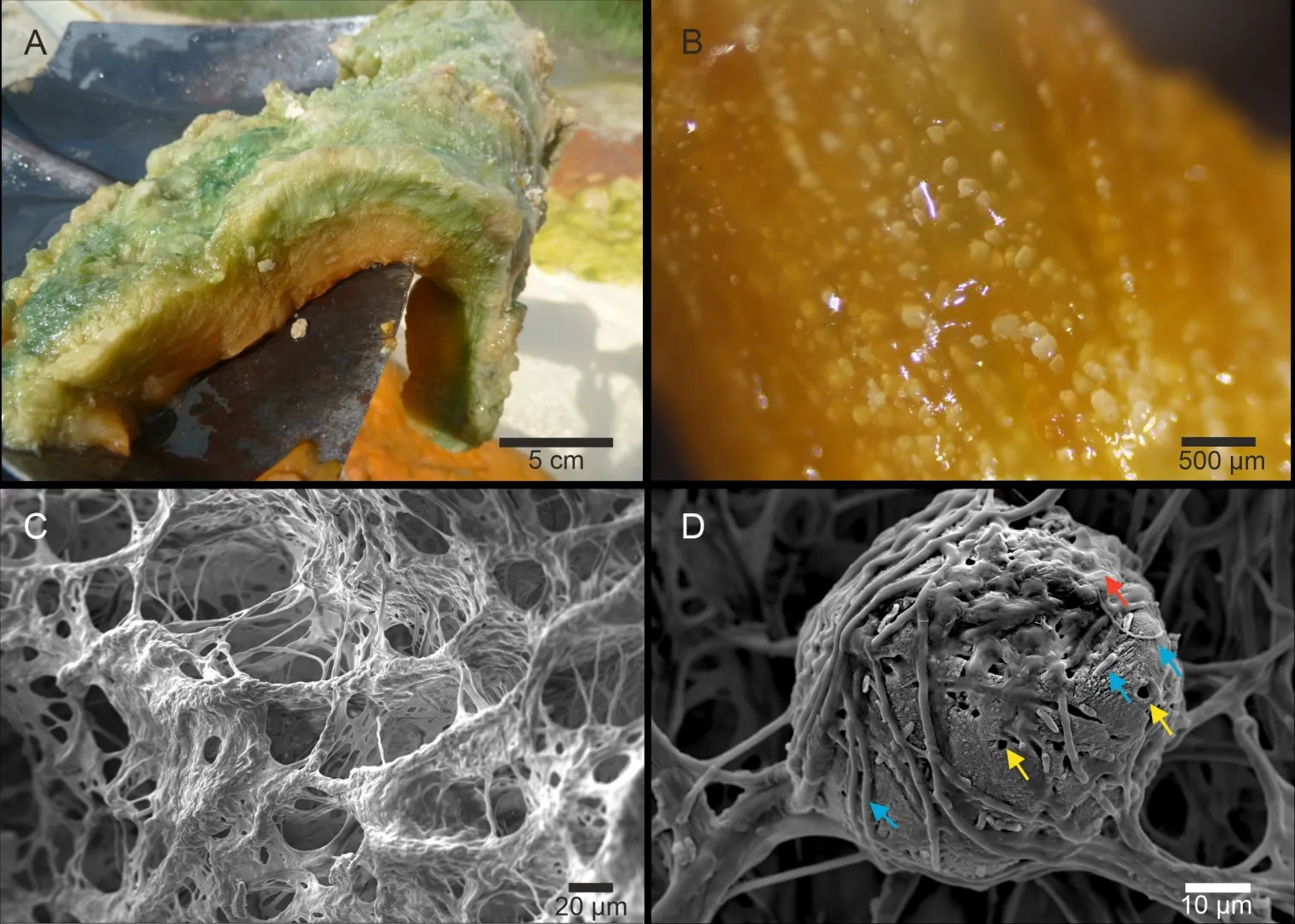
Related content
- Fresh Starts - University of Sopron Welcomes New Students with Orientation Day
- A New Academic Year Begins at the University of Sopron
- International Students Visit Local Animal Shelter
- University of Sopron and Mendel University Build Key Regional Partnership
- International Spotlight on Forestry Research at the University of Sopron
- International Life Gets Underway at the University of Sopron
- Record-Breaking Sustainability Ranking: University of Sopron Secures a Spot in the World's TOP 80
- Memorial Hike in the Footsteps of Sopron University Students of 1956
- International Peer Support in Action: Sharing, Reusing and Caring
